Quick Fixes Only Work for a Moment — Here’s What Creates Lasting Change
When Quick Fixes Feel Tempting
As a parent, you know the feeling: homework battles, sibling arguments, screen time struggles — and suddenly your child is acting out or withdrawing. You want results now, something that will stop the behavior and restore calm.
It’s easy to reach for quick fixes:
Reward charts and stickers
Scripts for what to say when your child misbehaves
Consequences or removal of privileges
“Just try this one thing” to make the behavior stop
Some of these tools can help in the moment. But in today’s world, immediate gratification is everywhere. Kids have learned that if I do this, I get that — right now. Whether it’s a prize for homework, money for grades, or an extra privilege, the promise of an instant reward can feel like a powerful motivator.
Here’s the problem: most behaviors aren’t just about rewards or consequences. They’re often signs of skills your child hasn’t learned yet. Quick fixes may stop a behavior today, but they don’t teach the skills your child needs to handle challenges tomorrow.
Most Behaviors Are Actually Skill Gaps
Think of behavior like learning a skill. Many children act out or struggle not because they’re “bad,” but because they simply don’t know how to do something yet.
Imagine learning to tie your shoes:
You can’t just do it the first time you see it.
You need someone to teach the steps and then practice over and over until it becomes automatic.
Behavior works the same way. If a child doesn’t yet know how to manage frustration, communicate feelings, or make good choices in the moment, no sticker, money, or punishment will magically fix it. What they need is teaching, guidance, and repeated practice — the tools to build the skill.
When children learn and practice these skills, behaviors improve naturally. They start making choices because they know how, not because they’re afraid of consequences or chasing rewards.
What Research Says About Motivation
Decades of research on motivation, including Self-Determination Theory (Deci & Ryan), show that:
External rewards and punishments may produce short-term behavior change
Long-term, meaningful change comes from internal motivation — when children understand why a behavior matters and feel confident in their ability to make choices
Shame, fear, and pressure reduce learning and problem-solving, making kids less likely to take ownership of their actions
In other words, behaviors driven only by rewards or consequences may create compliance, but not skill, responsibility, or confidence.
Why Stopping Behavior Isn’t Enough
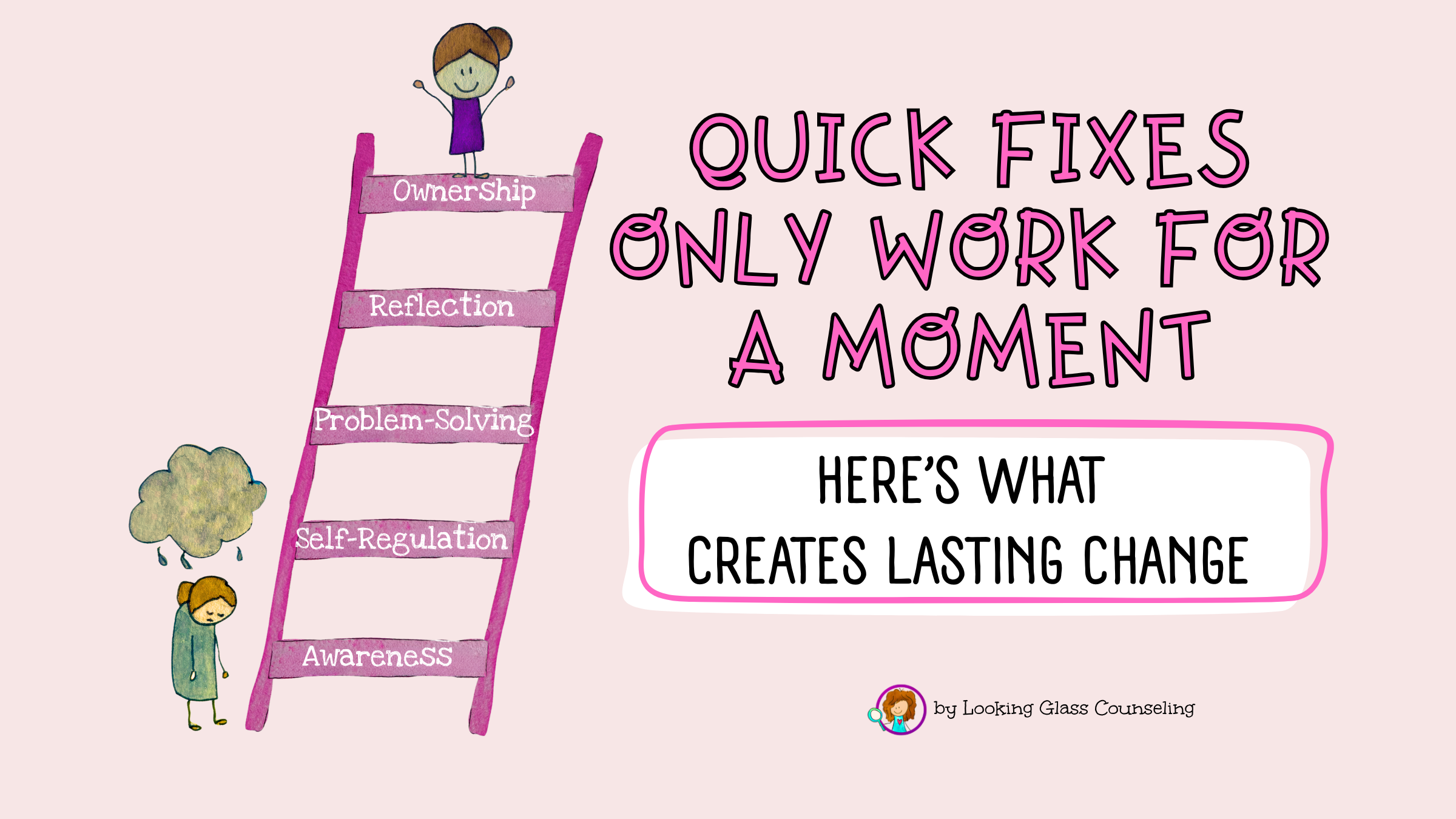
Quick fixes focus on stopping behavior, but lasting change requires building the skills behind the behavior. Children need opportunities to:
Recognize and name their emotions (emotional awareness)
Calm themselves and respond thoughtfully (self-regulation)
Solve problems and make decisions independently (problem-solving)
Practice mistakes safely and learn from them (reflection and repair)
When these skills are in place, behaviors improve naturally — because kids know how to handle life, not just how to avoid punishment or earn rewards.
Accountability Without Shame
Accountability works best when it’s paired with understanding and support, not shame. Research on self-compassion (Neff, 2003) shows that children are far more likely to take responsibility and make real changes when they feel safe and understood.
Helping kids connect their thoughts → feelings → actions → outcomes gives them insight and ownership. They learn that mistakes aren’t failures to hide — they’re opportunities to grow.
Action-Oriented Approaches That Stick
Kids need approaches they can relate to, understand, and practice in the real world. Action-oriented strategies help them:
Role-play tricky situations
Practice calming strategies in the moment
Solve problems in small, manageable steps
Reflect on feelings, choices, and outcomes
These approaches give children hands-on experience, so skills become internalized and usable — not just something that happens because of a reward or fear of consequence.
Built for the Long Run
We’re raising a generation that craves instant results, and it’s tempting to rely on quick fixes. But lasting change comes from teaching skills that children can use again and again. When kids learn, practice, and take ownership, they gain the confidence to navigate challenges, manage emotions, and make choices independently — far beyond the sticker chart, timeout, or immediate reward.
Final Reflection for Parents
Take a moment to reflect:
Where in your family do you notice a focus on quick fixes or immediate rewards?
Which behaviors might actually be skills your child hasn’t learned yet?
How could you create small opportunities for practice, reflection, and skill-building instead of relying solely on consequences or rewards?
You don’t have to get it perfect. What matters most is noticing the root of behavior, slowing down, and helping your child build real, lasting skills. Quick fixes may work for a moment, but teaching skills creates change that lasts — for your child, your family, and their future.