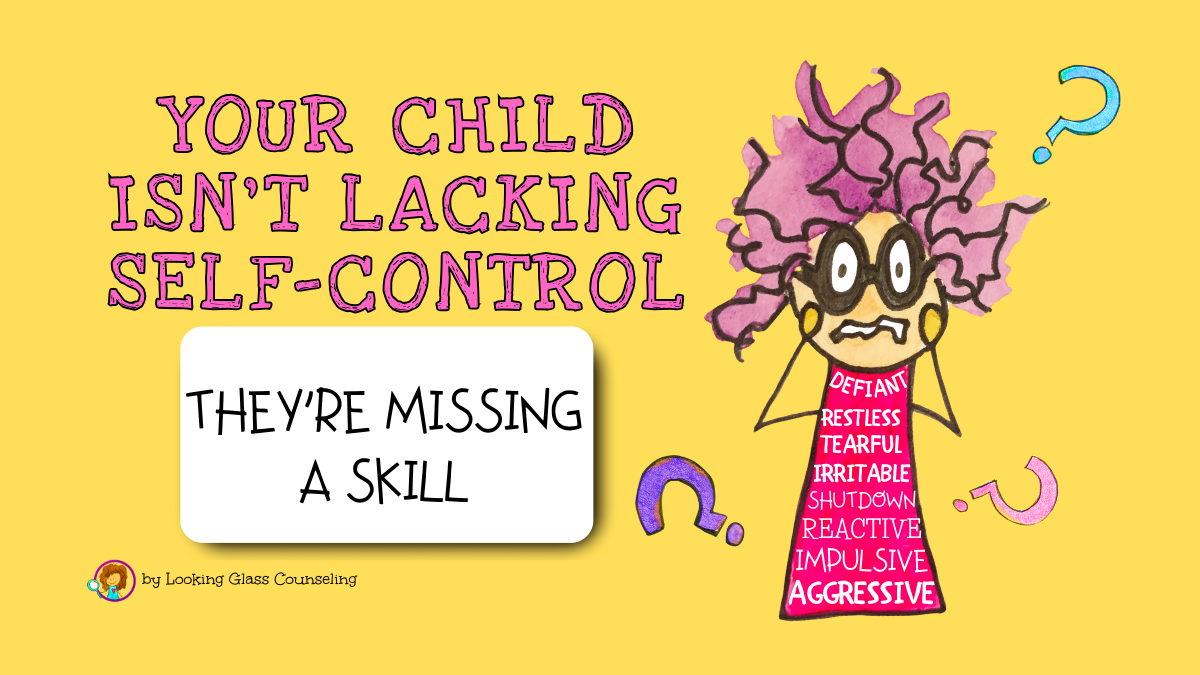
Your Child Isn’t Lacking Self-Control — They’re Missing a Skill
Emotional regulation is the ability to notice feelings, make sense of them, and recover after big moments.
Self-control, on the other hand, is about holding it together on the outside — stopping yourself from reacting, staying quiet, and doing what’s expected even when everything inside feels overwhelming.
Both matter.
But they are not the same thing.
A helpful way to think about it is this:
Self-control is like gripping the handlebars tightly and hoping you don’t fall.
Emotional regulation is learning how to ride the bike.
One is about forcing stability in the moment.
The other is about building balance over time.
And while white-knuckling the handlebars can look impressive, it doesn’t mean the skill has been learned.
Why Emotional Regulation Gets So Misunderstood
Emotional regulation helps a child move from overwhelm back to balance. It allows them to feel angry without hurting, disappointed without shutting down, and frustrated without falling apart forever.
Regulation doesn’t stop emotions from happening.
It teaches a child what to do with them.
But this is where things often go wrong.
Emotional regulation is frequently mistaken for staying calm.
For stopping the yelling.
The crying.
The falling apart over what looks like “nothing.”
Progress gets measured by quiet behavior — by compliance. By taking a deep breath on command. By “using your words” even when a child’s entire body is signaling distress.
Using the bike analogy, this is like praising a child for not falling — without noticing that the training wheels are still doing all the work.
Then comes the shift that changes everything:
The child isn’t failing at self-control.
The emotional regulation skill simply hasn’t developed yet.
And when regulation is mistaken for self-control, children are disciplined for a skill their brain is still learning — not a behavior they’re choosing.
What Emotional Regulation Isn’t
This matters, because this is where so many parents feel stuck — and ashamed.
Emotional regulation is not:
Staying calm all the time
Never having meltdowns
Obeying when an adult says “calm down”
Being emotionally mature beyond your age
Suppressing big feelings to keep the peace
If regulation were simply about self-control, children would “get it” once it was explained enough times.
They don’t — because regulation doesn’t live in logic alone.
You can’t talk someone into balance any more than you can lecture someone into riding a bike.
Why Meltdowns Happen Before Skills Exist
Children’s brains are under construction.
The part of the brain responsible for impulse control, emotional flexibility, and thoughtful responses — the prefrontal cortex — develops slowly over time. It’s not fully online in early childhood. Or even adolescence.
That means when emotions surge, kids don’t yet have reliable internal brakes.
So when a child explodes over the wrong cup, the lost shoe, the unexpected “no” — it’s not manipulation. It’s not defiance. It’s not a lack of respect.
It’s a nervous system wobbling without balance yet.
Just like a child learning to ride a bike, falling isn’t a failure — it’s part of the process.
Emotional Regulation Is a Skill — And Skills Are Learned
True emotional regulation includes the ability to:
Notice what you’re feeling
Name it
Connect it to where it shows up in the body
Ride the emotional wave without being overwhelmed
Recover after hard moments
Respond with awareness instead of reaction
That’s not self-control.
That’s development.
And development requires practice, modeling, and support — not punishment.
No one learns to ride a bike by being yelled at for falling.
Why “Calm Down” Doesn’t Teach Regulation
When a child is dysregulated, their brain is in survival mode.
Telling them to “calm down” is like telling a child who’s mid-wobble to “just balance better.”
They can’t access problem-solving or reasoning yet. Their system needs safety first.
That’s where co-regulation comes in.
Kids Borrow Regulation Before They Build Their Own
Before children can regulate themselves, they rely on the adults around them to help regulate with them.
This might look like:
Sitting nearby during a meltdown
Naming what you see without judgment
Offering a steady, calm presence
Holding boundaries without threats or shame
In bike terms, this is the adult running alongside — steadying the seat, offering reassurance, staying close enough to help when the wobble comes.
Your calm nervous system becomes the balance their body learns from.
Over time — with repetition — that borrowed regulation becomes internalized.
That’s how skills grow.
The Power of Naming Feelings
Research shows that naming emotions helps calm the nervous system.
When adults say:
“You’re really frustrated.”
“That felt unfair.”
“You’re sad it ended.”
They aren’t excusing behavior.
They’re helping the brain organize the experience.
Once emotions are named, the body can begin to settle.
Only then does learning happen.
You don’t correct balance mid-fall — you help the rider get back up.
Regulation Isn’t About Avoiding Big Feelings
This is the part many parents miss:
The goal isn’t preventing emotional storms.
It’s recovering from them.
Every meltdown followed by repair builds resilience.
Every hard moment met with support increases capacity.
Every time a child feels seen instead of shamed, their nervous system strengthens.
Falling off the bike isn’t the problem.
Never being helped back on is.
Practical Takeaways for Real Life
If you remember nothing else, remember this:
Name feelings before solving problems
Focus on recovery, not perfection
Practice skills during calm moments — not crises
Talk about emotions at dinner.
Play games that involve turn-taking and frustration.
Model regulation out loud:
“That was hard. I’m taking a breath.”
That’s teaching balance.
A Final Thought for Parents Who Are Trying So Hard
If you’re reading this and thinking, “That’s my child,” please know this:
Your child doesn’t need more discipline.
They need more support while their skills grow.
And the fact that you’re here — learning, reflecting, wanting to understand — says something important.
You’re not raising a “bad kid.”
You’re raising a human.
Emotional regulation isn’t about control.
It’s about connection, development, and time.
You’re not behind.
You’re building something that lasts.